
Imagine sending your child to school on a Friday morning and never seeing them come home.
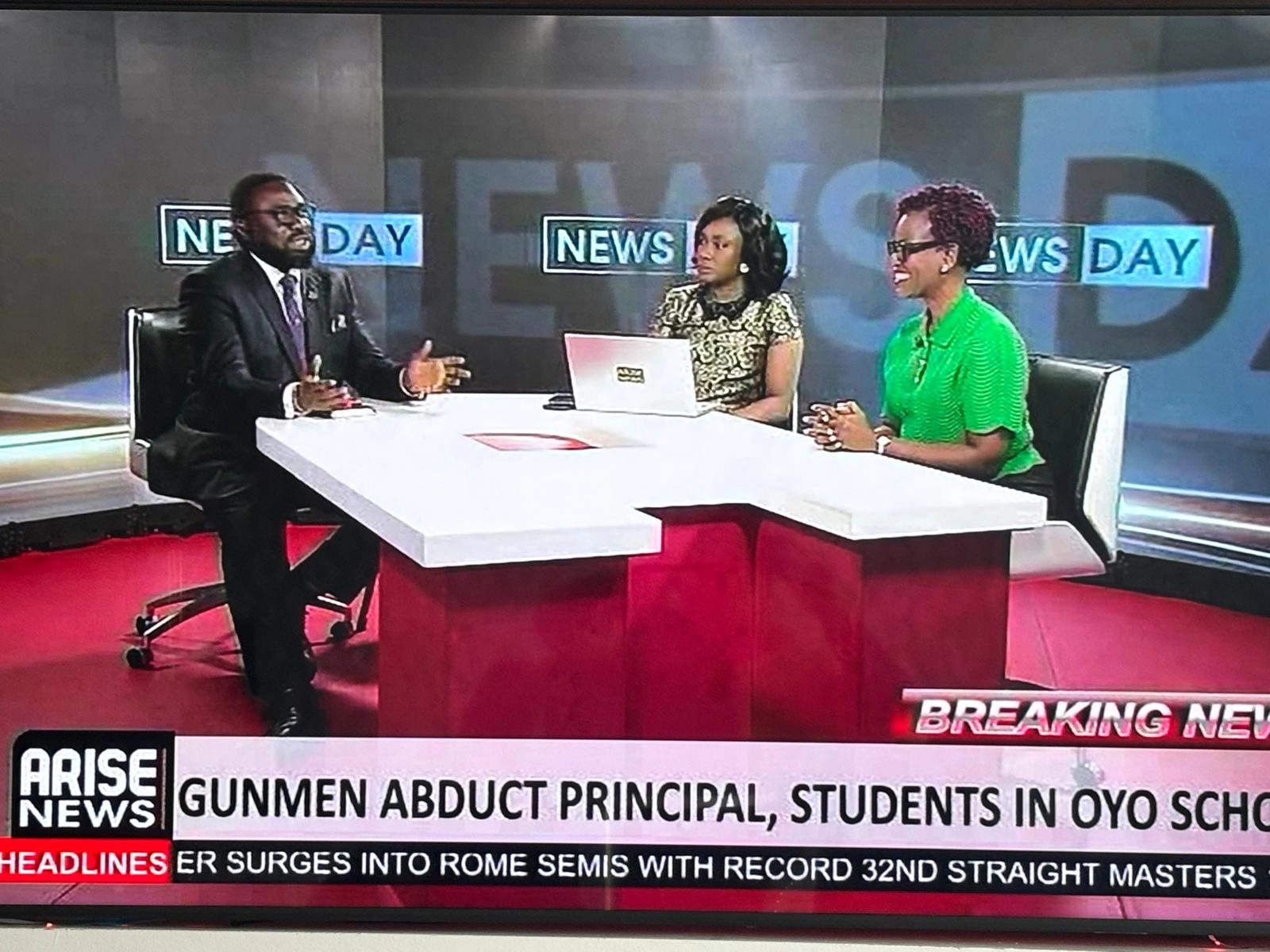
That is the reality thousands of Nigerian families now live with. On May 15, 2026, it became a reality for families in Ahoro-Esinele, a quiet community in the Oriire Local Government Area of Oyo State.
Gunmen riding motorcycles descended on three schools almost simultaneously: Baptist Nursery and Primary School in Yawota, Community Grammar School, and L.A. Primary School in Esiele. They came in the early hours, during morning assembly, when children were gathered and most vulnerable. They shot sporadically. Teachers, students, and the Vice Principal, Mrs. Alamu Folawe, were dragged away into the forests. An Assistant Headmaster, Mr. Adesiyan, was killed during the attack. An Okada rider was shot dead for refusing to hand over his motorcycle to the fleeing assailants.
By Sunday, May 17, a video had gone viral showing the beheading of one of the abducted teachers, Michael Oyedokun — a gruesome public message from the gunmen about the fate that awaits those still in captivity.
The community of Ahoro-Esinele is in mourning. So is the rest of Nigeria.
A Pattern That Has Gone On Too Long
What happened in Oyo is horrifying. It is also, painfully, not new.
Since the abduction of 276 schoolgirls from Chibok in April 2014, a crime that shocked the world and gave Nigeria a wound it has never fully healed from, the targeting of schools has become one of the most disturbing features of the country’s security crisis. In December 2020, over 300 boys were taken from a boarding school in Kankara, Katsina. In February 2021, students were seized in Kagara and Jangebe. In March 2024, gunmen on motorcycles abducted 287 pupils from a government secondary school in Kaduna. In November 2025, 25 schoolgirls were kidnapped from a school in Kebbi State, and just three days later, 303 children and 12 teachers were taken from St. Mary’s Catholic School in Niger State, in what became the single largest school abduction in Nigeria’s history.
Between January 2023 and late 2025 alone, at least 816 pupils were taken in 22 separate school attacks. Since 2014, the cumulative toll has reached over 2,400 children, a staggering number that does not even account for all the children who never returned.
And now, Oyo.
What makes the Oriire attack particularly significant is where it happened. School kidnappings have historically been concentrated in the north, in Borno, Niger, Kebbi, Katsina, Zamfara, and Kaduna. That was already a national crisis. But Governor Seyi Makinde of Oyo State himself warned that terrorists displaced by military operations in the north-west were moving southward, filling gaps wherever security presence is thin. The bandits in Oriire, he said, are believed to be members of armed groups pushed out of northern territories and now finding new terrain in the south-west.
No part of Nigeria is immune. That is the message being written in the blood of children.
Why Children? Why Schools?
It is a question that should not need asking, but the answer reveals the cold logic behind these crimes.
Schools are deliberate targets, not incidental ones. Security analysts have noted that armed gangs see schools as strategic: they attract media attention, create maximum emotional impact on families, and most critically, they generate ransom. Between July 2023 and June 2024 alone, kidnappers across Nigeria demanded approximately ₦11 billion in ransom payments. For criminal networks, children are currency.
The ransom economy feeds on desperation, on the love of parents who will do anything to bring their children home. It feeds on the slow pace of security response in remote, underserved communities, places like Ahoro-Esinele, where the Chairman of Oriire LGA himself admitted that the area is far from the nearest police station and difficult to access quickly.
The attackers in Oyo reportedly fled into forests bordering the Old Oyo National Park, terrain that is forested, vast, and nearly impossible to quickly comb. By the time military and police units arrived, the assailants had vanished.
What This Means for Education
Beyond the immediate horror, there is a quieter damage being done, one that threatens to outlast any single attack.
When schools become targets, children start associating learning with danger. Parents in communities near Oriire have begun keeping their children home. The Oyo State Universal Basic Education Board ordered the immediate closure of all primary schools in Oriire and three neighbouring local government areas, Surulere, Oyo East, and Olorunsogo, as a precautionary measure.
Closed schools. Empty classrooms. Children who should be learning, at home and afraid.
Education advocates have repeatedly warned that insecurity around schools does not just disrupt learning at the moment, but it erodes trust in the education system itself. When a parent has to weigh their child’s safety against their future, many will choose safety. Enrolment drops. Attendance falls. Girls, often the most vulnerable, are frequently withdrawn first and permanently.
For a country already grappling with one of the largest out-of-school child populations in the world, this is not a minor disruption. It is a deepening wound in an already struggling system.
The Response Cannot Be Business As Usual
Nigeria is a signatory to the Safe Schools Declaration, a commitment to protect education during conflict and insecurity. And yet the attacks continue. The Nigerian Senate, as recently as November 2025, ordered a full investigation into why funds set aside for the Safe Schools programme had apparently failed to protect children.
The pattern is clear: attacks happen, condemnations follow, investigations are announced, and then the cycle begins again.
This cannot continue.
The Oyo attack must be a turning point, not another headline that fades. Security agencies must pursue the Oriire abductors with every available resource until every child and teacher is safely returned. Families deserve answers, not press statements.
But beyond this immediate crisis, there must be a structural rethinking of how Nigeria protects its schools. More security deployment in rural communities. Intelligence-sharing between states, especially as armed groups move across boundaries. Community early warning systems. And above all, real accountability for how public funds designated for school safety are spent.
Our Commitment
At IA-Foundation, our mission is to ensure that every child has access to education, not just in theory, but in practice, safely, and without fear.
What happened in Oyo is an attack on that mission. It is an attack on every child’s right to sit in a classroom and learn, to dream, to become. When schools are targeted, the future of a nation is what the attackers are really holding for ransom.
We stand with the families of Ahoro-Esinele. We mourn with them. We call on federal and state authorities, security agencies, community leaders, and every Nigerian who believes in the future of this country to demand urgent, decisive, and sustained action.
We pray for the safe return of every abducted child, every teacher, every staff member still in captivity.
And we refuse to accept that this is simply how things are.
A nation that cannot protect its children is gambling with everything.
IA-Foundation works to keep out-of-school children in education by providing support for their basic educational needs. If you believe every child deserves to learn in safety and dignity, consider supporting our work.