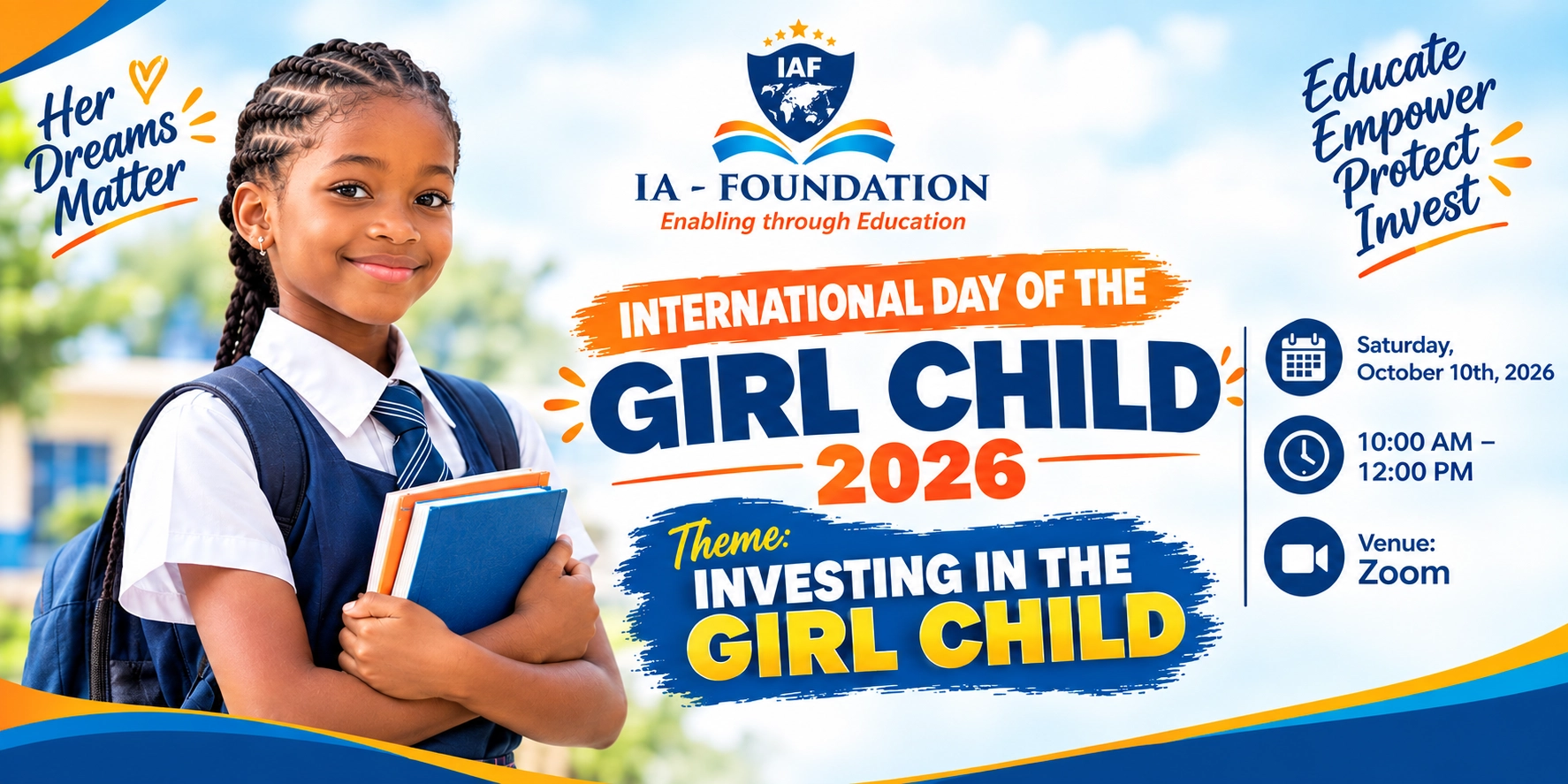
Keynote highlights from IA-Foundation’s International Day of the Girl Child 2026 webinar, “Investing in the Girl Child”
Picture one girl, twelve years old, standing at a classroom door.
If she walks in, her choices grow. She keeps learning, she builds confidence, she gains some control over the life she will lead. If she is withdrawn, her choices shrink, and the risk of child marriage and lifelong economic dependence rises.
That was how Bolaji Osime opened her keynote on Saturday, 10 October. Then she asked the audience to multiply that one girl by 7.6 million, the number of Nigerian girls she presented as out of school at basic education level. “Let this sink in,” she said. “Behind every number is a girl with ability.”
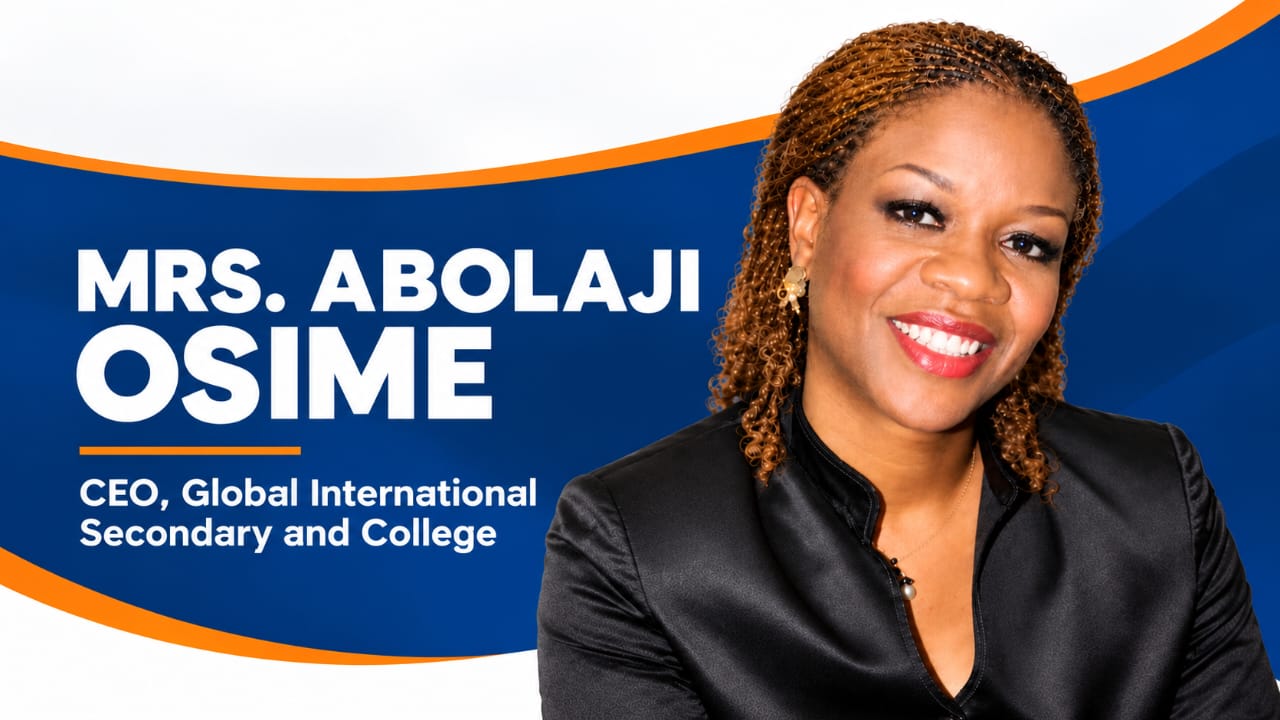
Bolaji is a lawyer, an education strategist and the CEO of Global International Secondary & College, with 25 years leading British-curriculum schools in Lagos and Abuja. Her topic was Investing in Girl Child Education: Keeping the Nigerian Girl in School and Learning. She spoke from practice, not theory.
A girl’s education is nation building
“Girls’ education is not charity,” she told the room. “It’s nation building.”
She told stories to make the point. One was of a girl in her Abuja school who went on to a master’s degree. Another was of a girl in the Lekki axis who had been out of school for two or three years. Once the community raised money and put her back in class, she was near the top of her class within two or three terms. “Which tells you,” Bolaji said, “that this young girl is actually gifted and smart.”
She also spoke about the Chibok mothers, who farmed to keep their children in school after the abductions, because they understood what education was worth.
The law is already on our side
One of her sharpest points was that Nigeria does not lack legal backing for girls’ education.
- Chapter 2, Section 18 of the Constitution commits government to free, compulsory, universal basic education.
- The Child’s Rights Act 2008 guarantees every child free, compulsory basic education and sets 18 as the minimum age of marriage.
- SDG4 and SDG5 call for quality education for all and an end to child marriage by 2030.
“The law backs us,” she said. “So how come this is being broken so blatantly?” For her, the problem is weak enforcement, plus a shrinking education budget. She noted that education’s share of the federal budget fell from 8.8% in 2023 to 6.1% in 2026, against a UNESCO benchmark of 15%.
Where you are born decides whether you learn
Bolaji walked through the data, and where a girl is born matters enormously. The burden of exclusion is heaviest in the North, she said, in states such as Kebbi, Zamfara, Bauchi, Yobe and Gombe. Within Nigeria, a girl from a wealthy household is about four times as likely to be in school as a girl from the poorest. Urban girls are far more likely to be in school than rural girls.
The barriers she named will be familiar to anyone who works in this space:
- Poverty, and the belief that a girl’s schooling is wasted money
- Insecurity, with schools as soft targets
- Schools too far away, without toilets or clean water
- Overcrowded classrooms
- Laws that are on the books but not enforced
She was careful to add that the picture is not the same everywhere. In parts of the South-East, she said, the concern is now the boy child.
What works
The most useful part of the keynote was the list of things that can be done now:
- Pay to stay. Support families directly through scholarships and cash transfers, as Bangladesh did, where secondary enrolment rose from 39% to 67%. Many parents keep girls out of school because they need them earning, so empower the family with a skill and an income too.
- Bring school closer. Build schools within safe reach of homes, with toilets, water and sanitary support.
- Engage gatekeepers. Work with imams, pastors and traditional leaders.
- Enforce the law. Apply the Child’s Rights Act and put minimum security around schools.
- Offer a second chance. Admit married girls and young mothers, and support accelerated learning and re-enrolment.
- Count every girl. Map out-of-school children community by community, door to door, and track each girl from enrolment to completion.
- Let girls speak. “Use girls’ voices to influence.”
She also pointed to what is possible: in Abia State, she said, her team has spent about two years helping reform education, with over 10,000 teachers trained and over 10,000 hired. “If Abia can do it, why are they not doing it in other states?”
And it need not be costly. Keeping a child in school in Lekki, she said, was about ₦50,000. “Ten pounds, thirty pounds is a lot of money in Nigeria.”
One girl, one plan, one pathway
Her ask for the next 12 months was simple to say and hard to do: one girl, one plan, one accountable pathway to completion.
To government: fund, legislate and enforce 12 years of free, safe schooling for every girl. To faith and traditional leaders: preach it in church and mosque, no girl married before 18, every daughter in school. To business people: sponsor a girl, a classroom, a scholarship. And to everyone listening: join IA-Foundation in bringing out-of-school children back to learn.
“What you would do for your own child, you must do for another,” she said. “Every child in Nigeria is our child.”
Be part of the answer
IA-Foundation works to get out-of-school children back into quality education, and our Sponsor a Child initiative pays for one child’s schooling through monthly, quarterly or annual giving.
Sponsor a child or support our work at ia-foundation.org